SentiLink
Published
August 18, 2026
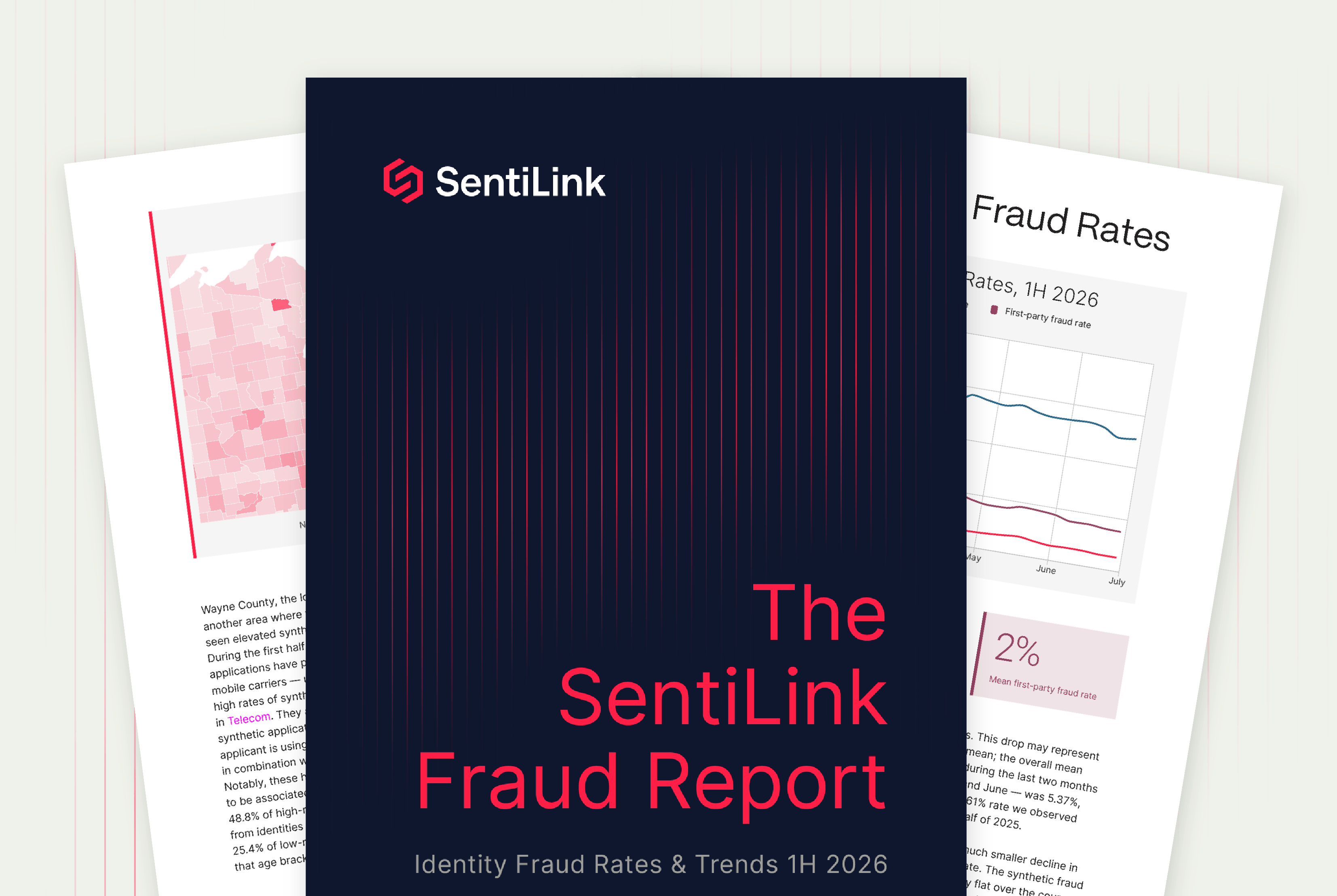
The latest edition of SentiLink's Fraud Report, covering 1H 2026, is out today. With over 50 pages of in-depth analysis of 170M+ real-world account opening applications, as well as write-ups on several recent fraud trends, the report shares what we're seeing in the ongoing battle against fraud with the broader fraud-fighting community.
The report is free, so you can grab a copy right now and read all the details. But it's a long read, so to give you a quick taste, here are three things we learned from digging into the 2026 data.
The SentiLink Fraud Report: Identity Fraud Rates & Trends 1H 2026
1. Fraud rates are falling (sort of)
Rates of all three fraud types we track — identity theft, first-party fraud, and synthetic fraud — dropped over the course of the first half of 2026. However, the overall identity theft rate in 1H 2026 was still higher than what we've observed in any previous report. Given that we have previously seen identity theft rates rise over the course of the second halves of both 2024 and 2025, we are not convinced that the drop we've seen over the course of this half reflects any sort of long-term trend.
The drops in the rates of synthetic fraud and first-party fraud were more modest. The synthetic fraud rate dropped both over the course of the half and YoY, but it remains within the bounds of the 50-90 bps range in which we've observed it in all previous reports.
We have not been tracking first-party fraud for long enough to speculate about what the modest drop there might reflect.
2. Fraudsters are getting more sophisticated
While residential proxies are nothing new, their availability has exploded (thanks in part to the AI boom) and the ease with which they can be detected has dropped significantly. In the first half of 2026, SentiLink observed multiple identity theft attacks in which the fraudsters leveraged residential proxies that did not appear on major commercial proxy detection lists — meaning their connections look legitimate to most anti-fraud systems.
These attackers also used legacy PII — phones and emails once genuinely associated with the victim, but since abandoned — to help their applications look even more legitimate to fraud detection systems.
Not all attacks are this sophisticated, but these tools are now easily available. We expect the frequency of this type of attack to increase.
3. First-party fraud is a major problem for auto lenders
While first-party fraud is a significant problem in all industries, only in auto lending did it exceed identity theft. There, the mean first-party fraud rate was above 5%, which is more than double the rate we observed in every industry except telecom.
Several unique features of U.S. auto lending may help explain this pattern; we detail some of these in the report.
Dig into the details
To learn more about all of these, and see the results of dozens of other analyses, grab your free copy of the report today:
The SentiLink Fraud Report: Identity Fraud Rates & Trends 1H 2026
Subscribe
Share


Related Content


.png)